Track Build · 20 May 2026 · 9 min read
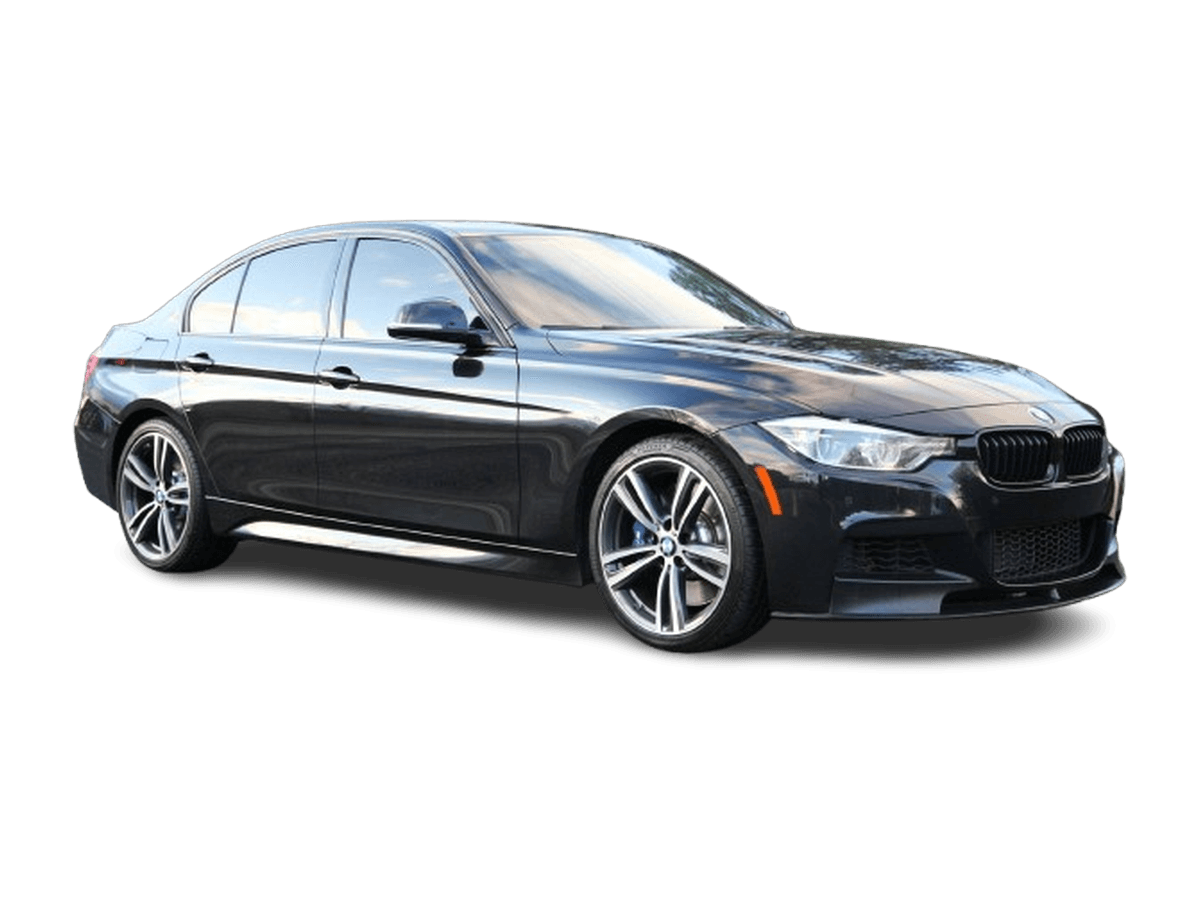
MU55 TBE, F30 340i Track Development (Phase 1)
Building a 340i capable of outperforming an M3 around the Nürburgring.
Specification
- Bilstein B16 Adjustable Coilovers
- Quaife ATB LSD
- BMW M3 / M4 Front Control Arm Kit
- Suspension Secrets Rear Camber Arms
- Suspension Secrets Rear Toe Arms
- Suspension Secrets Front Camber Plates
- Suspension Secrets Custom Alignment Setup
- Full Powerflex Rear Subframe & Differential Bush Kit
- 4.5″ Catless Downpipe
- M Performance Catback Exhaust
- B58 TU High Pressure Fuel Pump
- B58 TU Spark Plugs
- BMW F80 M3 Alloy Wheels
- COBB Front Mount Intake System
- VBT 360mm Two-Piece Drilled Disc Setup
- Ferodo DS2500 Pads
- HEL Braided Brake Lines
- Bootmod3 Platform
- 117 Speed Custom ECU Calibration
- xHP Stage 3 TCU Calibration
Development Philosophy
The goal of this build was simple: create a 340i capable of outperforming an M3 around the Nürburgring.
This wasn't built in a workshop and guessed at. Every phase of development was validated on-track at the Nürburgring Nordschleife, the most demanding real-world test environment for both chassis and powertrain calibration. Each trip exposed limitations. Each iteration solved them.
Phase 1, Baseline Power & Calibration Validation
The car's first outing was close to stock in terms of chassis, with a focus on validating the powertrain and ECU strategy.
Initial upgrades:
- 4.5″ catless downpipe
- Panel filter
- Bootmod3 multi-map calibration (3 strategies)
The top map was set at ~460 hp / 660 Nm, right at the safe limit of the stock HPFP. At this stage, the focus was not peak numbers, it was thermal stability and repeatability:
- Lambda targets stabilised under sustained load
- Ignition calibrated for zero heat-induced correction
- Torque model aligned to prevent throttle closure
- Throttle mapping tuned for progressive but responsive delivery
The result: a car that could be driven flat-out lap after lap without overheating, intervention or inconsistency.
The xHP Stage 3 TCU calibration transformed the drivetrain:
- Faster shift times
- Optimised shift logic for track driving
- Raised torque limiters
- Improved clutch pressure strategy under load
From a powertrain perspective, the car was already behaving correctly. The chassis, however, was not.
Want a build like this on your car?
Message SamuelFirst Nürburgring Test, Identifying Weakness
The first full test immediately exposed the limitations:
- Excessive body roll
- Poor front-end grip
- Severe understeer
- Open differential instability on exit
- Brake fade within a single lap
This is exactly the data we needed. Power delivery was correct, but the car could not use it.
Phase 2, Braking & Initial Chassis Improvements
The first priority was braking performance.
Upgrades:
- VBT 360mm two-piece drilled discs
- Ferodo DS2500 pads
- HEL braided lines
- High-performance brake fluid
Key improvements:
- Dramatically increased thermal capacity
- Consistent pedal feel under repeated load
- Significantly improved initial bite and modulation
Brake fade was eliminated.
Phase 3, Grip & Geometry
Next step: mechanical grip and geometry correction.
- Eibach lowering springs (initial stage)
- F80 M3 wheels + Michelin Pilot Sport 4S
This improved:
- Contact patch size
- Mid-corner grip
- Turn-in response
- Reduced tyre slip and instability
However, this was still a partial solution, geometry and damping control were still limiting factors.
Thinking about your own spec? Talk it through with Samuel.
Message SamuelPhase 4, Fuelling & Turbocharger Development
To safely increase power, fuelling had to be addressed.
The stock HPFP becomes a limiting factor at ~450 hp. We upgraded to the B58 TU HPFP, enabling:
- Stable rail pressure at higher load
- Headroom for ~550 hp / 700 Nm
Turbo upgrade, Littco L520 Supercore
- Retains stock-like spool characteristics
- Increased compressor efficiency
- Stronger mid-range and top-end flow
Result:
- ~520 hp / 700 Nm
- Near-instant boost response
- No drivability compromise
This is critical for track use, lag kills consistency.
Second Nürburgring Test, Major Gains
Results were immediate:
- Zero brake fade across multiple laps
- Improved mid-corner stability
- Better traction on exit
- Significant straight-line performance gains
But limitations remained:
- Open differential instability
- Inconsistent rear-end behaviour under load
- Chassis still not fully composed
Phase 5, Full Chassis Transformation
This was the most important stage of the build.
Differential & Bushings
- Quaife ATB LSD
- Powerflex rear subframe + diff bushes
Impact:
- True torque distribution across rear axle
- Eliminated inside wheel spin
- Improved drive out of corners
- Increased stability under load transitions
Suspension System
- Bilstein B16 adjustable coilovers
- Full M3 / M4 front arm conversion
- Suspension Secrets camber plates
- Suspension Secrets rear camber arms
- Suspension Secrets rear toe arms
- Full geometry setup
Key gains:
- Increased front camber and caster
- Improved turn-in response
- Reduced body roll
- Full adjustability of rear geometry
- Proper load distribution across tyres
The alignment setup from Suspension Secrets unlocked the full potential of the hardware.
The result:
- Sharp front-end response
- Predictable rotation
- High-speed stability
- Massive increase in driver confidence
Questions about this build? Message Samuel directly.
Message SamuelPhase 6, Final Power Upgrade (L620 Setup)
Final hardware step:
- Littco L620 turbo
- COBB front mount intake system
The intake relocation is critical:
- Moves intake charge piping away from engine bay heat
- Direct airflow from front grille
- Significant reduction in intake air temperature
Datalog results: up to ~25 °C reduction in charge air temps.
Despite HPFP limitations, final output: ~550 hp / 730 Nm.
Key point: this setup is not about peak numbers, it is about usable power under real conditions.
The L620 delivers:
- Near-stock spool
- Massive mid-range
- Strong top-end carry
Final Nürburgring Test, Complete Package
The difference was transformational:
- Immediate turn-in response
- No body roll
- Stable under braking
- Controlled, predictable exits
- No traction loss under power
- Consistent performance lap after lap
The car was now:
- Faster on straights
- More stable in corners
- More predictable under load
We were comfortably running alongside significantly higher-end machinery, including GT3-level cars. At this point, the limiting factor was no longer the car.
Summary
This build demonstrates a key principle: track performance is not defined by peak power, it is defined by how effectively the car can deploy that power.
Every change was made with that in mind:
- Torque shaping
- Thermal control
- Chassis balance
- Mechanical grip
- Driver confidence
Want a build like this on your car?
Message SamuelPhase 2, In Development
The next phase will focus on:
- Dedicated wheel & tyre setup
- Weight reduction
- Fixed bucket seats
- Further chassis refinement
- Expanded fuelling system
- Increased power targets
This is not a finished car. It is a continuously evolving development platform.
Ready to start your build? Message Samuel for a quote.
Message Samuel